

Eucalyptus bark can be turned into ethanol.
News10 de May de 2026
Research shows that the product can be turned into fuel, in a process similar to sugarcane.
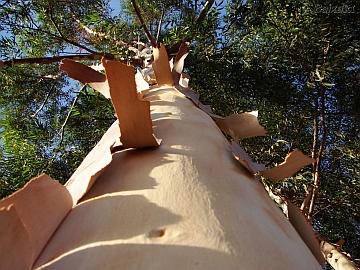
It is feasible to produce ethanol from the discarded eucalyptus bark by pulp and paper factories. This is revealed by a study conducted at the Luiz de Queiroz College of Agriculture (Esalq) of USP, in Piracicaba, by chemist Juliano Bragatto. The results demonstrate that one ton of waste generates 200 kilograms of sugars. And they, in turn, will allow the production of 100 liters of ethanol. The number can double with the use of sugar existing in the structure of the bark.
Currently, these residues remain in the soil of plantations after the extraction of the tree trunk, which is normally destined for the paper and pulp industry. "A reasonable amount of bark is discarded in the soil with the cutting of the wood, around 20 tons per hectare. When fermented over the years, this material releases greenhouse gases," said Labate.
"In some cases, burning is done to produce energy, but the large amount of ash generated makes the process quite unsatisfactory," says Bragatto. "To avoid the formation of an environmental liability, the chemical composition of the bark was evaluated to understand the potential for transformation into bioethanol." It is now known that fresh bark, obtained immediately after cutting the wood, contains 20% soluble sugars. "This number drops by half in a period of two to three days, as the sugars in the bark degrade, so the ideal would be to use the residue immediately after it is produced."
The yield of the ethanol production process from eucalyptus residues is similar to that of sugarcane alcohol. "The bark is washed with water at 80 degrees, where an infusion is obtained that is put in contact with the yeast," explains the chemist. "It is also possible to grind the bark and carry out the fermentation with the juice obtained, in the same way as sugarcane."
Source: Eptv.com
Lippel manufactures machines for grinding eucalyptus bark
Forest wood chippers
We also manufacture forest chippers, ideal for chipping both the tree and the bark, preparing it for the fermentation process while it is still fresh and enhancing ethanol production. Lippel forest chippers can be connected to the tractor's power take-off, providing mobility and economy, and can be sized according to the desired chip size.
Click on the images below and learn more about the chippers: