

The Invisible Bottleneck in Urban Management: Why Your Operation Needs to Rethink Pruning Waste
24 de May de 2026
If you lead a municipality, a power utility, or an urban maintenance company, you know that growing cities bring a daily, high-volume challenge: the management of green waste.
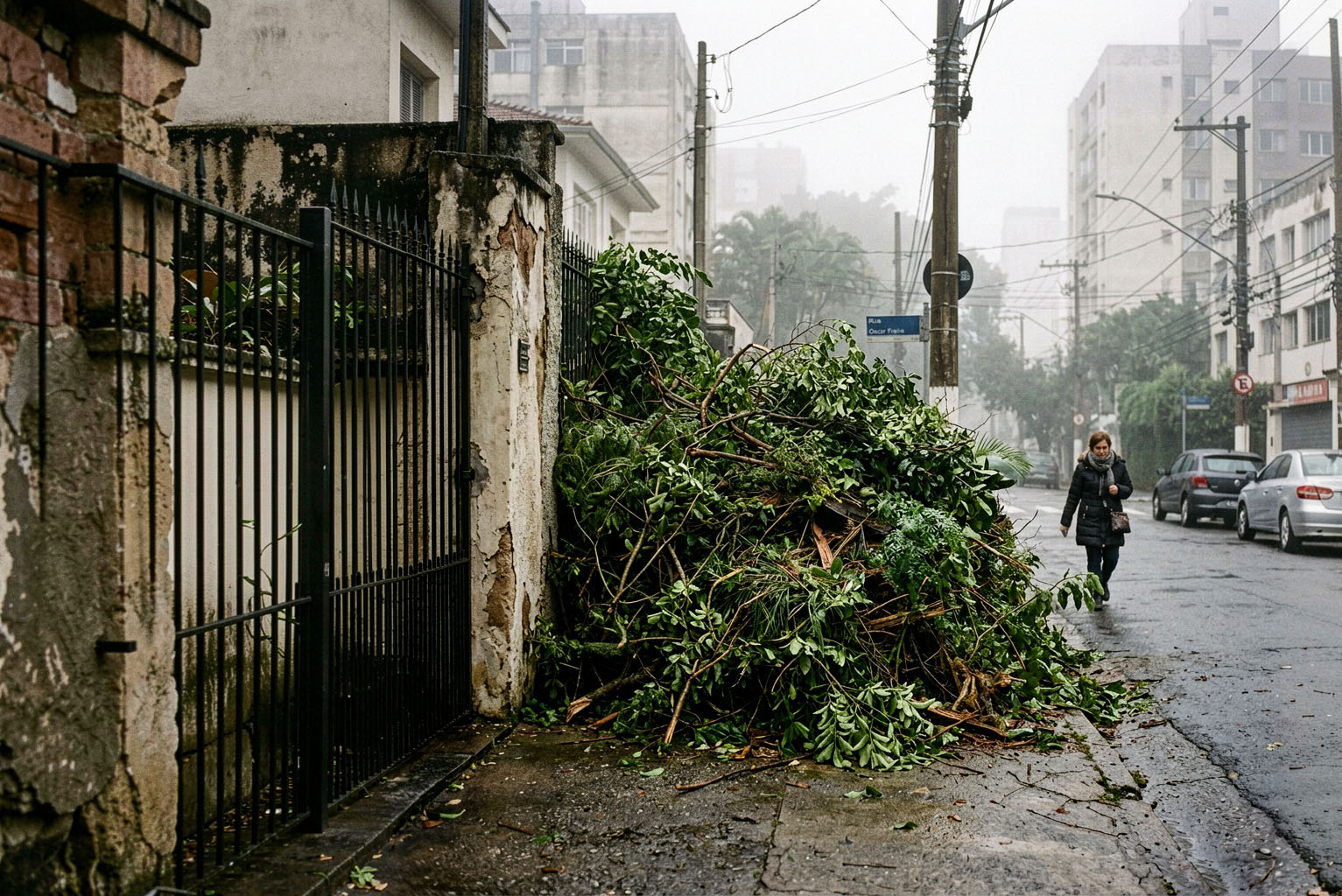
Every day, miles of right-of-ways and power lines must be cleared, parks require maintenance, and public roads demand safety pruning. The result? Tons of branches, leaves, and trunks that need to be collected, transported, and discarded.
But have you ever stopped to calculate the true financial and logistical cost of this operation?
The Logistical Challenge of "Hauling Air"
In their natural state, branches and pruning waste occupy an immense volume but weigh very little. In practice, when trucks drive off fully loaded with unchipped branches toward disposal sites, your operation is spending fuel, time, and labor to haul air.
This creates a cycle of inefficiency:
-
Excessive trips: More trucks are needed to clean the exact same area.
-
Fleet wear and tear: Higher mechanical wear, increased maintenance costs, and greater pollutant emissions.
-
Landfill saturation: Overcrowding disposal sites with waste that could have a much better purpose.
With increasingly strict environmental regulations and growing pressure for ESG goals, treating urban pruning waste as "regular garbage" has become unsustainable — both for public and corporate budgets.
The Smart Transformation: From Volume to Value
The solution to this bottleneck is not hiring more trucks, but rather changing how waste is treated right at the collection site. This is exactly where Lippel Wood Chippers come into play.
By integrating chipping into your maintenance routine, the operational dynamic changes completely:
-
Up to 80% volume reduction: What used to fill five trucks now fits into just one. Fewer trips mean immediate fuel savings and optimized crew time.
-
Agile logistics and cleared roads: Public roads and worksites are cleared much faster, reducing traffic impacts and increasing public safety after storms or during preventive power line maintenance.
-
Disposal savings and sustainability: Fragmented material stops being a heavy liability in landfills and transforms into valuable biomass. The wood chips can be repurposed for landscaping projects, organic composting for local agriculture, or as fuel for industrial boilers.
Engineering Tailored to Urban and Agroforestry Realities
To meet the diverse infrastructure realities of municipalities and utility companies, Lippel’s solutions — including the renowned PDU and PTU lines — are engineered based on maximum versatility and robustness:
1. Mobility and Drive Versatility
Every operation has a different logistical scenario. Therefore, the equipment adapts to your infrastructure:
-
Combustion engines (diesel or gasoline): Ideal for high-autonomy operations on highways, power lines, or locations without power grid access.
-
Electric motors: Excellent for urban composting yards, offering a much quieter operation.
-
Tractor Power Take-Off: The smart choice for worksites that already have tractors available, eliminating the need for additional engines and simplifying storage and maintenance.
2. High Performance and Uninterrupted Robustness
Professional operations cannot afford frequent downtime. Lippel’s cutting systems are sized for high productivity:
-
Smart cutting systems: They combine heavy-duty blades and rotors designed to process everything from green, soft branches to dry, hard woods without requiring constant pre-cutting.
-
Professional capacity: Dimensioned to process robust diameters (with models handling up to 50 cm), featuring wide feed hoppers that reduce preparation time and prevent jams.
-
Mechanical protection: Reinforced structures, overload sensors, and protection systems against foreign objects ensure durability under severe, continuous use.
3. Legal and Operational Safety (Compliance)
Worker safety is non-negotiable. Lippel chippers are equipped with easy-access emergency buttons, safety bars, and physical guards at the feed hopper. The entire portfolio is strictly designed in compliance with technical workplace safety standards (such as NR-12), mitigating accident risks and protecting your institution from legal liabilities.
Lippel: Partnership and Specialized Consulting
More than manufacturing high-durability machinery, Lippel offers a complete technical consultancy for municipalities, concessionaires, and maintenance companies throughout Latin America and global markets.
We help your team select the ideal model based on pruning volume, average branch diameter, and transport logistics. Furthermore, we ensure operational efficiency from day one with on-site operational training, preventive maintenance support, and widespread availability of spare parts.
The future of urban management demands intelligence, sustainability, and resource optimization. It is time to transform your city's or concession's pruning management into a model of efficiency.
Want to understand how Lippel Wood Chippers can reduce your operation's logistical costs? Contact our specialists and discover the ideal solution for your reality.