

Lippel wood chippers boost efficiency and quality in grain drying for Paraná agribusiness
News15 de October de 2026
In Paraná, rural producers are investing in technology to add value to their soybean, corn, and wheat production, reducing harvest losses and optimizing costs. One highlight is the use of wood chippers to generate high-quality wood chips, which are essential for producing biomass used in grain drying processes on farms.
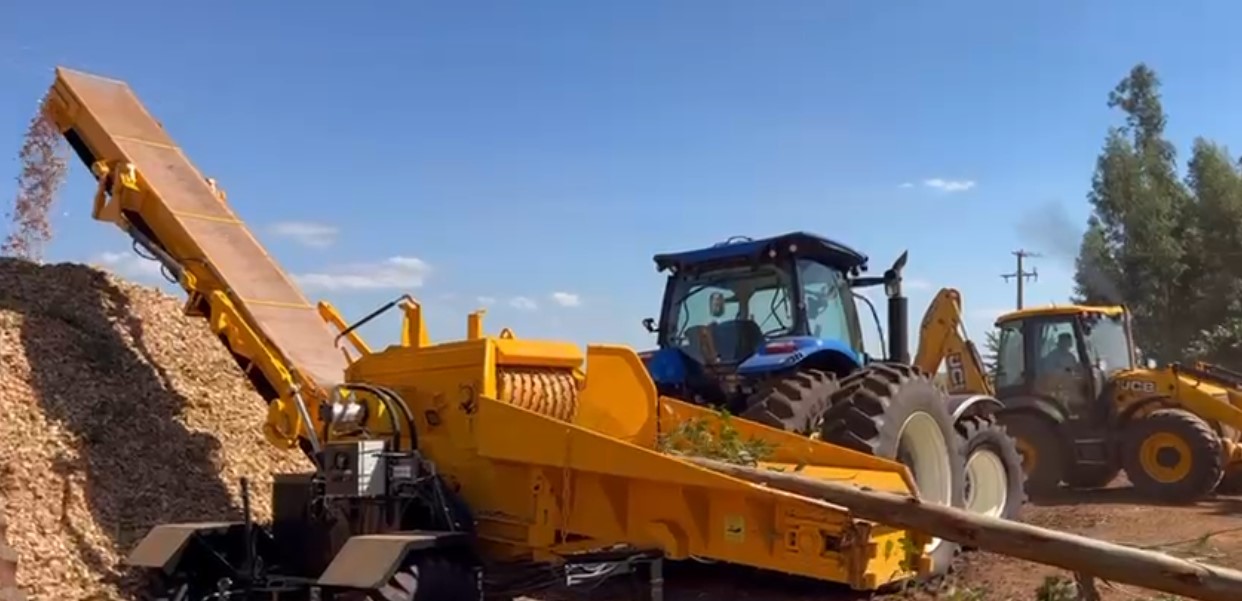
A local farmer, already familiar with Lippel’s solutions, has just acquired his second piece of equipment from the brand: the RAPTOR 700T Forest Wood Chipper. Previously, he used the PDF 320 model, but with increased demand and the need for higher productivity, he decided to upgrade to meet the growing production of eucalyptus wood chips.
The RAPTOR 700T stands out for its robustness and cutting-edge technology. Mounted on a transverse forestry chassis, the equipment offers easy transport and operation, with a production capacity of up to 70 m³/h of chips with an average size of 30 mm. Its diesel engine and adjustable feed system ensure energy efficiency and versatility, allowing the farmer to vary chip size according to the needs of the farm's grain dryer.
Using wood chips as biomass for grain drying brings proven benefits: in addition to reducing operational costs and drying time by up to 15%, the use of chips provides more uniform heat, preserving grain quality and preventing losses during harvest. The technology also contributes to greater ergonomics and safety in handling, eliminating the need for manual transport of logs to the furnace.
According to the farmer, the choice of the RAPTOR 700T was driven by the search for higher yield and quality in biomass production, as well as the proven reliability of Lippel equipment. "With the new chipper, I can meet all the demands of the farm's grain dryer, ensuring higher quality grains and more added value to my business," he says.
Lippel reinforces its commitment to offering innovative and efficient solutions for agribusiness, supporting rural producers in adopting sustainable and technological practices to increase productivity and profitability in the field.